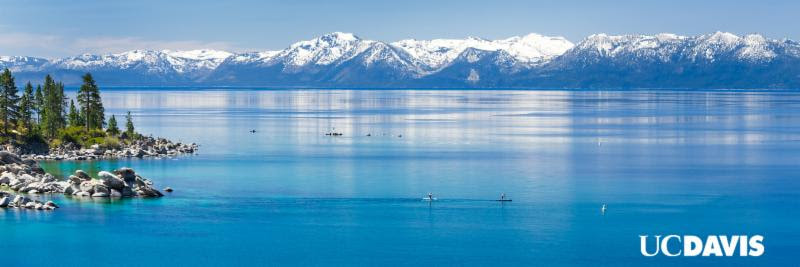
Tahoe’s clear water passes blue light to 100 feet…
which is why the lake looks so blue..but the fate of it’s clarity depends on mindful stewardship from me and you
WATER: Follow the Water That Connects Us Paddle the Lake Tahoe Water Trail
72 miles around Lake Tahoe: Find launch points, day routes, safety information, weather conditions, and stewardship guidance. Become an “Eyes on the Lake” citizen scientist
Lake-wide: Look for and report aquatic invasive plants while kayaking or paddleboarding.
Follow the Tahoe–Pyramid Trail
Tahoe City to Pyramid Lake: Walk or bike portions of the river’s journey from Lake Tahoe through Reno and into Pyramid Lake. Make a Citizen Science Tahoe observation
Lake Tahoe and tributaries: Report algae, water clarity, litter, invasive species, or changing stream conditions to researchers. Track a Creek
Choose a tributary near you and follow it safely toward the lake or river. Notice what enters the water along the way.
Belonging question: Where did this water come from, where is it going, and whose life depends upon it?
This is only the beginning.
The 8 Worlds of Wonder is a living, community-curated map of experiences that help people connect with and care for the Tahoe / Truckee /Pyramid watershed.
Are you a student, guide, artist, scientist, culture bearer, local organization, or resident with an experience to contribute? Help us reveal the watershed through the 8 Worlds.
Suggest a Connecting Activty
Become a Student Mapping Partner
Share What You Noticed
Lake Tahoe’s water is supplied by two primary natural sources: direct precipitation and its surrounding tributaries. About half of the lake’s water comes directly from rain and snow falling right onto its surface, while the other half is fed by 63 natural streams and rivers draining the surrounding basin. [1]
Lake Tahoe's hydrological system relies entirely on these natural inputs, alongside a specific process for how water is removed or utilized: [1]
Fish
Waterfowl & Amphibians
(Note: There is also the local legend of Tahoe Tessie, a mythical serpent-like lake monster, but she hasn't been officially spotted!) [1]
Swim, Kayak, Paddle, Float, Wade, Explore, Steward, Conserve…drink. Our mission is to showcase adventures that create connection to the 8 Worlds of Wonder:
Lake Tahoe's hydrological system relies entirely on these natural inputs, alongside a specific process for how water is removed or utilized: [1]
- Direct Precipitation: Because the lake itself is so large, about 40% to 50% of all rain and snowfall in the Tahoe Basin falls straight onto the water. [1, 2]
- Tributary Streams: The remaining water flows into the lake from 63 streams and rivers. The largest of these is the Upper Truckee River. [1, 2]
- Outputs & Evaporation: Water leaves the lake in only two ways. About a third flows out into the lower Truckee River (controlled by a dam in Tahoe City). The rest is lost naturally to evaporation. [1, 2]
- Drinking Water: While the lake is the ultimate source of water for the region, local taps get their supply either through direct pumping from the lake (as seen in areas like Incline Village) or from local underground aquifers (which are continuously recharged by the same snowmelt and rain in the basin). [1, 2]
Fish
- Lake Trout (Mackinaw): The apex predator of the lake, these deep-water fish were introduced in the late 19th century and can grow quite large. [1, 2, 3, 4, 5]
- Rainbow, Brown, & Brook Trout: Popular sport fish introduced to the lake that thrive in the cold water. [1, 2]
- Lahontan Cutthroat Trout: The only trout species truly native to the Lake Tahoe basin. They are endangered and rarely caught by casual anglers. [1, 2, 3]
- Kokanee Salmon: A landlocked sockeye salmon introduced in the 1940s. They are famous for turning bright red and spawning in Taylor Creek every autumn. [1, 2, 3, 4, 5]
- Mountain Whitefish: The only native game fish still found in the lake and its surrounding rivers. [1, 2]
- Bass: Both Largemouth and Smallmouth bass can be found in the warmer, shallower waters like the Tahoe Keys. [1, 2]
- Signal Crayfish: A species of freshwater lobster that lives along the rocky lakebed.
- Mysis Shrimp: Deliberately introduced decades ago as a food source for the trout, though they have since heavily altered the lake's natural food web.
- Asian Clams: An invasive species that exists in massive numbers in the southern and eastern shallows of the lake. [1, 2, 3]
Waterfowl & Amphibians
- Birds: While many live along the shores rather than in the deep water, you will frequently spot Bald Eagles, Ospreys, Mallards, and Canadian Geese diving for fish.
- Frogs: The endangered Mountain Yellow-Legged Frog lives in higher-elevation water bodies within the basin. [1, 2, 3, 4, 5]
(Note: There is also the local legend of Tahoe Tessie, a mythical serpent-like lake monster, but she hasn't been officially spotted!) [1]
Swim, Kayak, Paddle, Float, Wade, Explore, Steward, Conserve…drink. Our mission is to showcase adventures that create connection to the 8 Worlds of Wonder:
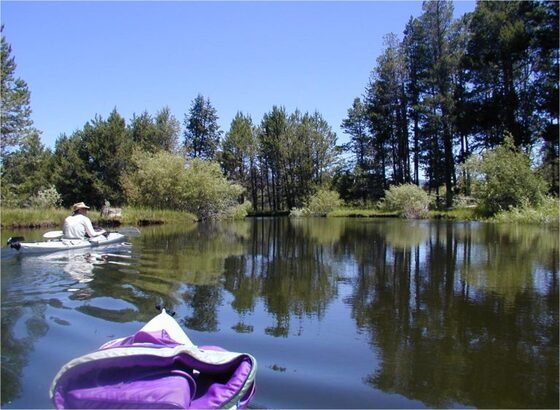
Guided kayak and SUP Board trips
River Trips Choose Your Trip Truckee / Tahoe Area Rafting Trips Northern California Rafting Trips Overnight and Custom Rafting Trips